
Understanding AuDHD: When ADHD and Autism Overlap
If you have ever felt like you are constantly running on empty — pushing through every day with sheer willpower while the world feels too loud, too fast, and too much — you are not alone, and there may be more to the story than you realize.
Many people live for years with one diagnosis — often ADHD or anxiety — without knowing that autism is also part of their experience, or vice versa. When both ADHD and autism are present together (sometimes called "AuDHD"), they do not just sit side by side. They interact. They push and pull against each other in ways that can make daily life feel harder than it seems like it should be.
The diagram below shows how some symptoms belong mostly to ADHD, some mostly to autism, and some live in the overlap — the space where both conditions amplify each other. That overlap is often where the most exhausting parts of daily life come from: the burnout that rest does not fix, the feeling of being driven by obligation rather than energy, the social exhaustion that builds no matter how well things seem to go on the outside, and the constant effort of holding it all together in ways that others cannot see.
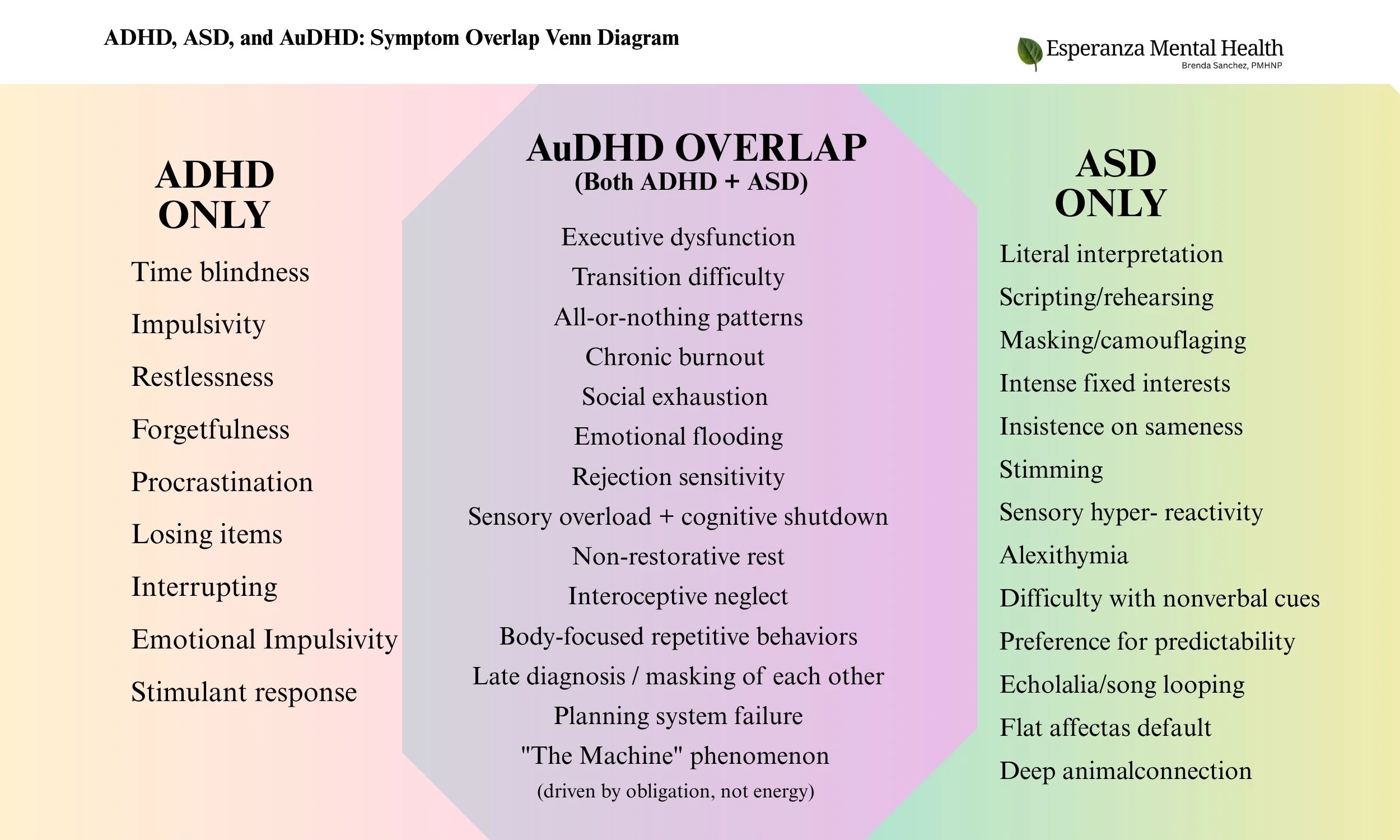
This is not about labels. It is about understanding. When you understand how your brain works — not just one piece of it, but the whole picture — everything starts to make more sense. The things that felt like personal failures start to look like mismatches between how your brain is wired and what the world expects. And that shift in understanding is where real, meaningful support begins.
What Seeking Help Can Look Like
Seeking help does not have to mean something is wrong with you. It means you deserve support that actually fits how your brain works.
I believe the goal of a thoughtful provider isn't to place a label on you. It's to help you better understand how your brain works, recognize your strengths, identify the challenges you've been carrying, and provide practical recommendations that support the life you want to build.
When appropriate, a formal diagnosis can also open the door to meaningful support. Under the Americans with Disabilities Act (ADA), individuals diagnosed with ADHD, autism, or both may qualify for reasonable workplace accommodations. Depending on your needs, these may include:
Written instructions instead of verbal-only directions
Flexible scheduling or modified break structures
A quieter workspace or permission to use noise-canceling headphones
Reduced sensory distractions, such as modified lighting when feasible
Clear, direct communication and expectations from supervisors
Opportunities to work independently when appropriate
Many adults who receive a diagnosis later in life tell me the same thing: "I wish I had known sooner." Not because a diagnosis changes who they are—but because it finally explains experiences they've carried for years. That understanding often becomes the foundation for greater self-compassion, healthier relationships, more effective coping strategies, and support that truly fits the way their brain works.
If you've spent years feeling like you're constantly trying harder just to keep up, you don't have to keep wondering. I'd be honored to help you find the answers you're looking for.